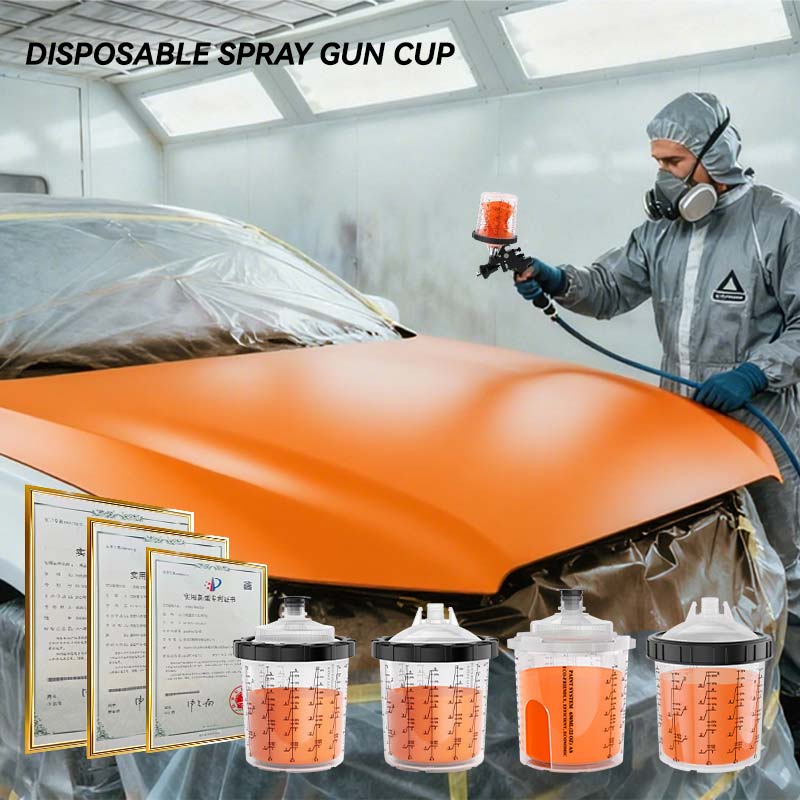

Why Does a Paint Mixing Cup Matter More Than Most Buyers Expect?
In coating work, small mistakes become expensive very quickly. A color mismatch, an unstable ratio, a contaminated batch, or a wasted refill can slow down production, increase rework, and frustrate both operators and customers. That is why a reliable Paint Mixing Cup is not just a plastic container. It is a practical control point in the whole painting process. Whether the job is automotive refinishing, industrial coating, furniture spraying, or repair work, the right cup helps teams measure accurately, work cleanly, and move faster with fewer surprises.
At Qingdao Aspaint Technology Co., Ltd., this category is understood from the user’s real working environment rather than from a catalog-only perspective. Buyers are not simply looking for a cup. They are looking for smoother paint preparation, more consistent finishes, less solvent loss, clearer ratio reading, and fewer disruptions on busy spray lines. That is exactly why choosing the right product deserves more attention than many people first assume.
Article Summary
This article explains why a Paint Mixing Cup plays a key role in coating accuracy, jobsite cleanliness, and material control. It looks at the most common user pain points, what features really matter in daily use, how different volumes fit different tasks, and what buyers should check before placing an order. It also includes a practical outline, a comparison table, and a detailed FAQ to help purchasers make a more confident decision.
Table of Contents
- Outline
- Why do coating jobs go wrong before spraying even starts?
- What does a good Paint Mixing Cup actually solve?
- Which features should buyers care about most?
- How do different cup sizes affect workflow?
- Where is a Paint Mixing Cup most useful?
- How should buyers evaluate suppliers and products?
- What separates an ordinary cup from a dependable one?
- FAQ
- Conclusion
Outline
- The hidden cost of poor paint preparation
- How the right cup improves accuracy and efficiency
- Important details such as scale clarity, material stability, sealing, and handling comfort
- How to choose the right size for small repairs and large-volume work
- Typical applications in automotive, industrial, and woodworking environments
- What professional buyers should verify before ordering
- Clear answers to frequently asked questions
Why do coating jobs go wrong before spraying even starts?
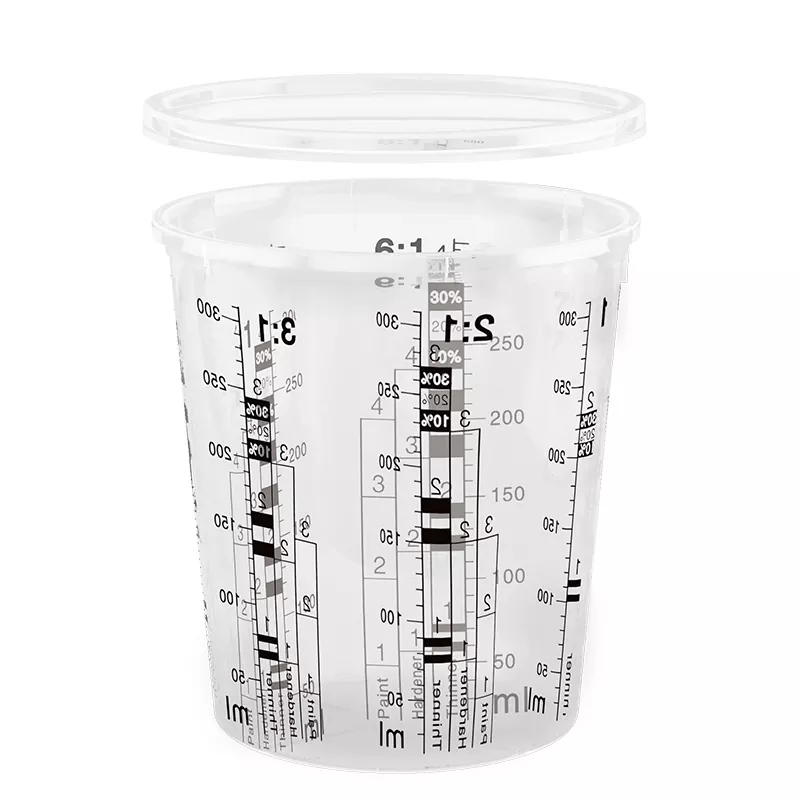
Many buyers focus heavily on spray guns, paint chemistry, and final finish quality, but preparation is where many avoidable problems begin. If the mixing ratio is slightly off, the coating may cure too slowly, dry too quickly, lose gloss, or show poor adhesion. If the measuring marks are unclear, operators may waste time double-checking or guessing. If the cup wall is weak or unstable, handling becomes awkward. If the lid does not close properly, short-term storage becomes messy and solvent evaporation can change the mixture before use.
In real production, these are not small inconveniences. They lead to material waste, color inconsistency, repeated labor, cleanup time, and delivery pressure. For shops handling multiple batches in a single shift, even minor inefficiencies multiply. That is why buyers who once treated this item as a low-priority consumable often change their minds after experiencing rework costs.
- Inaccurate ratio reading can affect finish quality.
- Poor transparency makes it harder to monitor the mixture.
- Weak sealing can lead to leakage or unnecessary solvent loss.
- Low durability can create handling problems during busy operations.
- Unclear sizing choices can result in either waste or repeated refilling.
Practical point: Buyers who want more stable output should look at preparation tools with the same seriousness they apply to coating materials. The right Paint Mixing Cup reduces variation before the spray gun is even picked up.
What does a good Paint Mixing Cup actually solve?
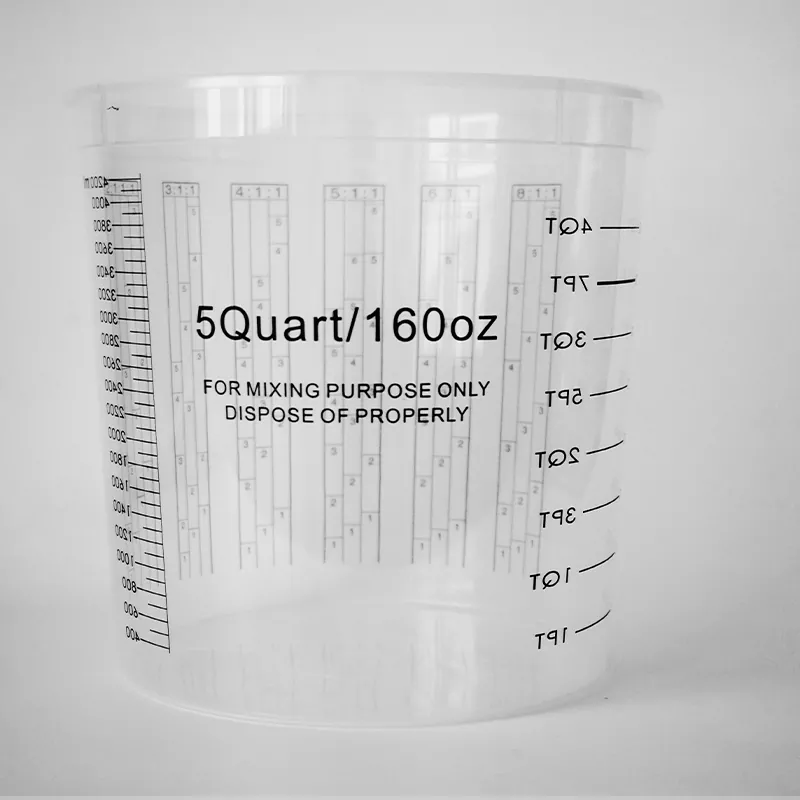
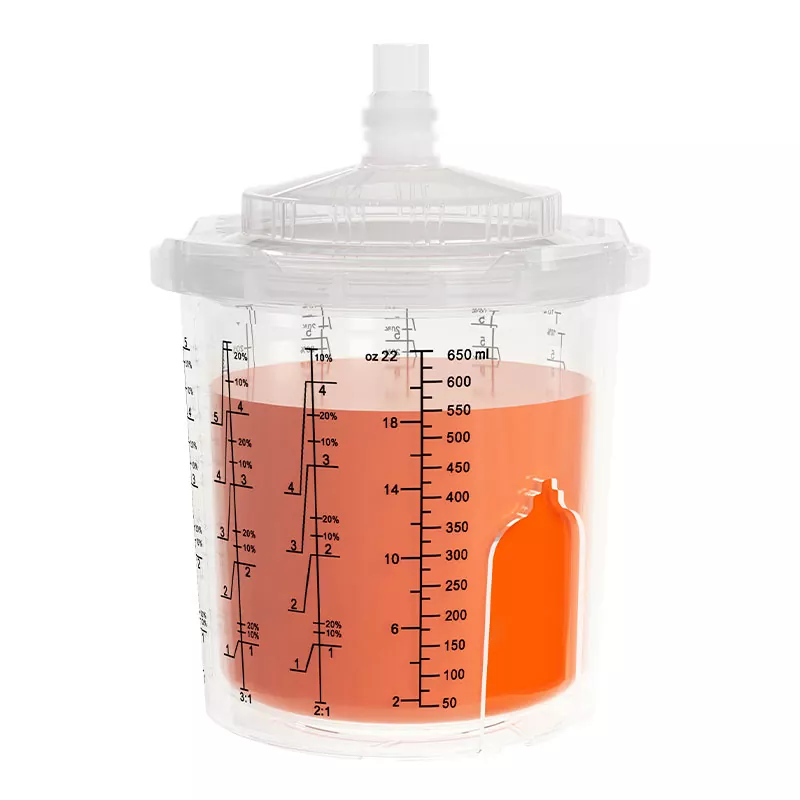
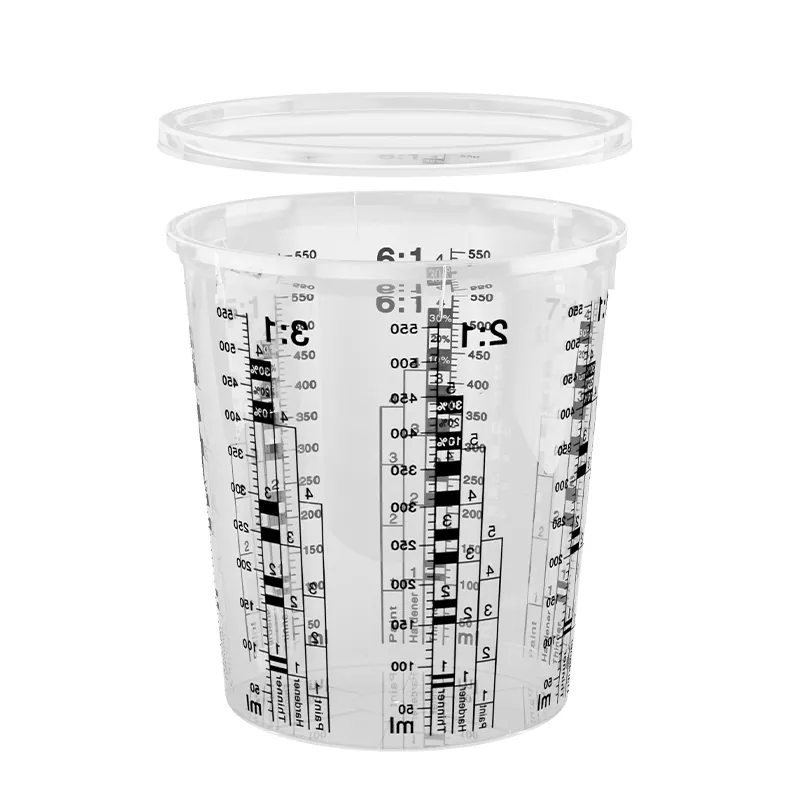
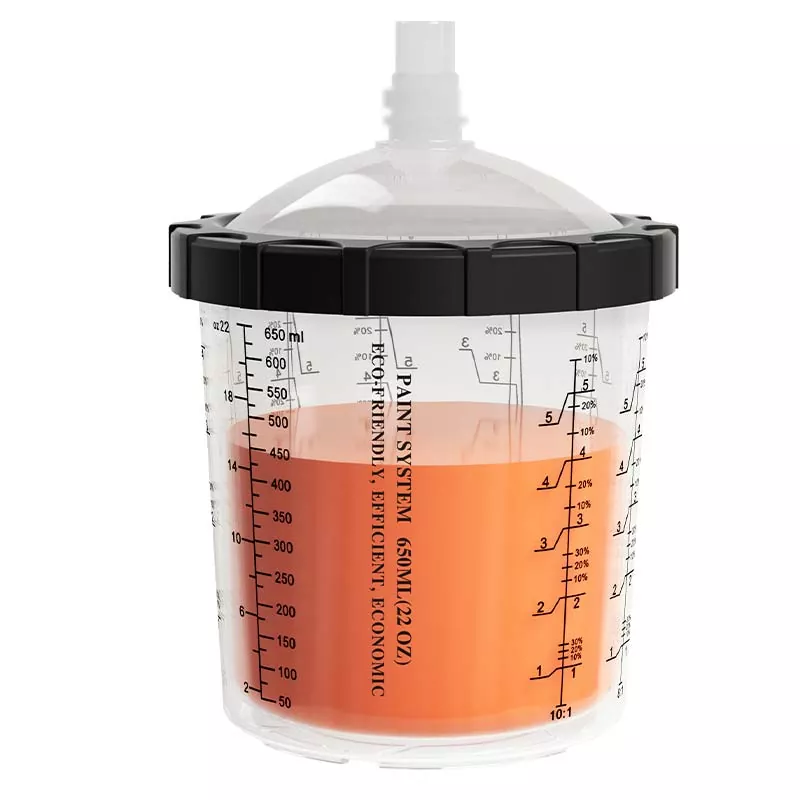
A well-designed Paint Mixing Cup simplifies several steps at once. First, it provides a clear measuring reference so the operator can mix paint, hardener, and thinner with confidence. Second, it reduces contamination because the cup is dedicated to the batch instead of being repeatedly washed and reused under uncertain conditions. Third, it supports a cleaner workflow, especially when used with a lid for short-term storage between preparation and application.
More importantly, a good cup supports rhythm. In fast-paced environments, workers do not want to wrestle with hard-to-read scales or unstable handling. They want a container that feels intuitive: easy to fill, easy to stir, easy to move, and easy to check at a glance. That kind of convenience does not just save seconds. Over time, it protects productivity.
For procurement teams, the benefit is broader. A dependable Paint Mixing Cup supports standardization. It helps different operators follow the same mixing logic, which improves repeatability from one batch to the next. That matters whether the work is one repair panel or a larger industrial coating project.
Which features should buyers care about most?
Not every cup that looks acceptable on paper performs well in real use. Buyers should move beyond price alone and evaluate features that affect daily results. The most important details are usually the most practical ones.
- Clear ratio markings: The scale should be easy to read quickly, even in active workshop conditions.
- Stable material quality: The cup should maintain shape during filling, stirring, and carrying.
- Good transparency: Users should be able to observe mixing progress without strain.
- Optional lid support: Useful for temporary storage and cleaner handling between steps.
- Comfortable opening and wall structure: Easier pouring and stirring help prevent spills.
- Size options: Buyers should not be forced into one volume for every application.
These details matter because coating work is repetitive. Small design advantages become meaningful when used every day. A cup that improves reading clarity, handling confidence, or storage convenience can quietly reduce friction across the entire process.
| Feature | Why It Matters | Buyer Benefit |
|---|---|---|
| Clear measurement scale | Helps users follow ratios quickly and consistently | Reduces mixing mistakes and rework |
| Durable PP construction | Supports stable handling during stirring and movement | Improves reliability in busy shops |
| Lid compatibility | Allows short-term storage and cleaner transfer | Helps reduce leakage and unnecessary waste |
| Multiple capacity choices | Lets users match the cup to the task size | Improves material control and efficiency |
| Transparent cup body | Makes the mixing condition easier to observe | Better visual control during preparation |
How do different cup sizes affect workflow?
One of the most common buyer mistakes is choosing a single volume for every use case. That usually creates either excess capacity or repeated refilling. A smart purchasing plan considers the kinds of jobs being handled most often.
Smaller capacities are often better for touch-ups, spot repair, color testing, or lower-volume batches. Mid-size options suit common refinishing tasks where balance matters most. Larger capacities work well when coating larger surfaces or preparing more material in fewer mixing cycles.
When the cup size fits the application, the process becomes smoother. The operator spends less time adjusting, less time cleaning around spills, and less time remixing additional material. This is especially useful for teams that need both flexibility and consistency in the same workshop.
| Project Type | Suggested Approach | Reason |
|---|---|---|
| Small-area repair | Use a smaller Paint Mixing Cup | Keeps material control tighter and reduces leftover waste |
| General refinishing work | Choose a medium-capacity cup | Balances convenience, reading space, and batch size |
| Large-panel or multi-part work | Select a larger cup with stable handling | Reduces repeated preparation and workflow interruption |
| Industrial batch mixing | Plan capacity according to coating volume and line pace | Supports smoother production scheduling |
Where is a Paint Mixing Cup most useful?
The value of a Paint Mixing Cup is easiest to see in industries where coating quality and process control matter every day. Automotive refinishing is an obvious example because color accuracy and ratio precision are directly tied to visible results. Industrial coating environments also benefit because consistency and speed often matter just as much as appearance. Wood finishing and furniture spraying rely on careful preparation too, especially when users need to monitor the blend visually.
These are different work environments, but their core needs overlap: accuracy, cleanliness, repeatability, and convenience. That is why the same product category appears across several sectors. A buyer may come in looking for a low-cost consumable, but the stronger suppliers understand that this product supports workflow discipline.
- Automotive refinishing: Helps maintain accurate paint mixing and cleaner batch handling.
- Industrial coating: Supports process consistency and smoother operator routines.
- Wood coating and furniture finishing: Makes it easier to observe the condition of the mixture.
- General repair and maintenance: Useful where quick preparation and reduced contamination are important.
How should buyers evaluate suppliers and products?
Good purchasing decisions come from asking practical questions, not just comparing quotations. Buyers should examine whether the supplier understands application scenarios, not only specifications. A product that looks acceptable in a picture may still cause frustration in the workshop if the scale is difficult to read, the structure feels weak, or the lid fit is inconsistent.
When evaluating options, it helps to ask:
- Are the measurement markings clear enough for fast daily use?
- Is the material stable during mixing and handling?
- Are multiple capacity options available for different projects?
- Does the supplier understand automotive, industrial, or woodworking applications?
- Can the supplier support customization, sampling, or ongoing supply consistency?
Buyers should also think about the broader relationship. Reliable delivery, product consistency, and communication quality matter just as much as the first order. For long-term procurement, a supplier that understands production realities is far more valuable than one that only competes on a low opening price.
That is one reason many buyers prefer manufacturers that focus on coating consumables and related workflow products rather than treating this category as an afterthought.
What separates an ordinary cup from a dependable one?
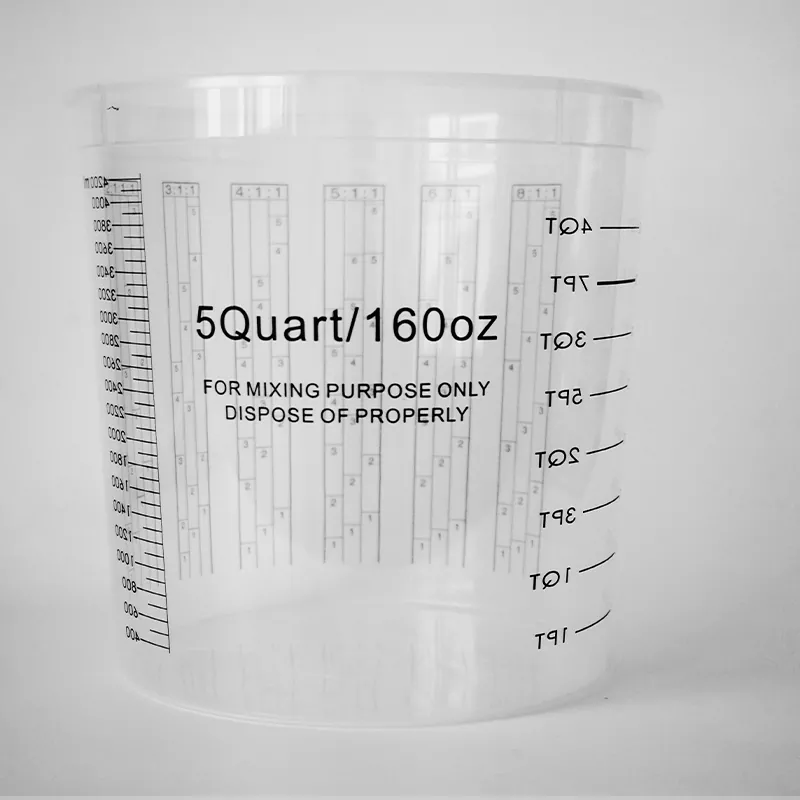
The difference is not usually dramatic in a product photo. It becomes obvious during actual work. An ordinary cup may hold liquid, but a dependable Paint Mixing Cup helps the user work with more confidence. It is easier to read, easier to manage, easier to match to the job, and easier to trust during repeated use.
| Ordinary Option | Dependable Option |
|---|---|
| Looks acceptable but offers limited practical support | Designed around real mixing and handling needs |
| Unclear markings can slow operators down | Readable scale supports faster, more confident work |
| Single-size thinking | Capacity options fit different job types better |
| Basic containment only | More complete workflow support, including short-term storage convenience |
| Chosen only for unit price | Chosen for process value, consistency, and reduced avoidable waste |
That is the real purchasing logic. The better product does not just hold paint. It protects process quality and reduces friction across the preparation stage.
FAQ
Q1: Why is a Paint Mixing Cup important if the spray gun is the main tool?
The spray gun applies the coating, but the result depends heavily on what happens before spraying. If the ratio is wrong or the mixture is inconsistent, the finish can suffer no matter how good the spray equipment is.
Q2: What should I check first when buying a Paint Mixing Cup?
Start with scale clarity, material stability, available sizes, and whether a lid option is provided. These factors affect everyday efficiency much more than many buyers expect.
Q3: Is one cup size enough for every workshop?
Usually not. Small jobs, medium refinishing work, and large-volume coating tasks often benefit from different cup sizes. Matching volume to application helps reduce waste and repeated preparation.
Q4: Can a Paint Mixing Cup help reduce contamination?
Yes. Dedicated cups help keep batches separate and reduce the risk that residue from previous work affects the next mixture.
Q5: Why do buyers care about lids on mixing cups?
A lid can support cleaner handling and short-term storage. This is useful when the operator needs a little time between mixing and application or wants to reduce unnecessary exposure during workflow transitions.
Q6: Which industries commonly use Paint Mixing Cups?
Automotive refinishing, industrial coating, furniture finishing, wood coating, and general maintenance environments all use them where measuring accuracy and cleaner paint preparation are important.
Q7: Is a low-cost cup always the best buying choice?
Not necessarily. If a cheaper product creates ratio errors, handling issues, or extra waste, the total cost of use may end up being much higher than expected.
Conclusion
A Paint Mixing Cup may look simple, but its effect on coating work is very real. It helps control ratios, supports cleaner preparation, improves consistency, and reduces many of the small disruptions that slow teams down. For buyers who care about finish quality, workflow stability, and practical value, this product deserves careful selection rather than casual replacement.
If you are sourcing dependable coating consumables and want a solution that fits real application needs, Qingdao Aspaint Technology Co., Ltd. is worth serious consideration. The right product choice can make paint preparation easier, cleaner, and more predictable from the very first batch.
Ready to improve your coating workflow? If you are looking for a more dependable Paint Mixing Cup solution for automotive refinishing, industrial coating, or wood spraying, now is a good time to compare your options carefully. Contact us to discuss your application, volume needs, and sourcing requirements, and take the next step toward a cleaner and more efficient paint preparation process.
Related News
- How Does the 200ML Disposable Paint Cup System 1.0 Transform Automotive and Industrial Spray Painting Efficiency?
- Why the 400ML Disposable Paint Cup System 1.0 Is a Game‑Changer for Auto Refinishing?
- Why Is the 125mic Filter Mesh Paper Paint Strainer the Smart Choice for Efficient Paint Preparation?
- How Can a 1.0 Series Air Spray Gun Aluminum Thread Adapter Improve Spray Performance and Equipment Compatibility
- Why Is the 2.0 Series Air Spray Gun Stainless Steel Thread Adapter Essential for Achieving Professional Spray Finishing Results
- Is the 400ML Disposable Paint Cup System 2.0 the Smartest Choice for Modern Automotive and Industrial Painting
Leave me a message